Houghton House
Medical detox
Safely recover from alcohol and drug withdrawal with our in-house medically-supervised detox programme.
Start your recovery in a safe, supportive, and medically supervised environment. Attempting to detox at home is dangerous. Withdrawal from alcohol, benzodiazepines, or opioids can cause seizures, severe dehydration, and cardiac complications that require immediate medical attention. Supervised detox in a licensed facility like Houghton House keeps you safe through the most physically demanding stage of recovery.
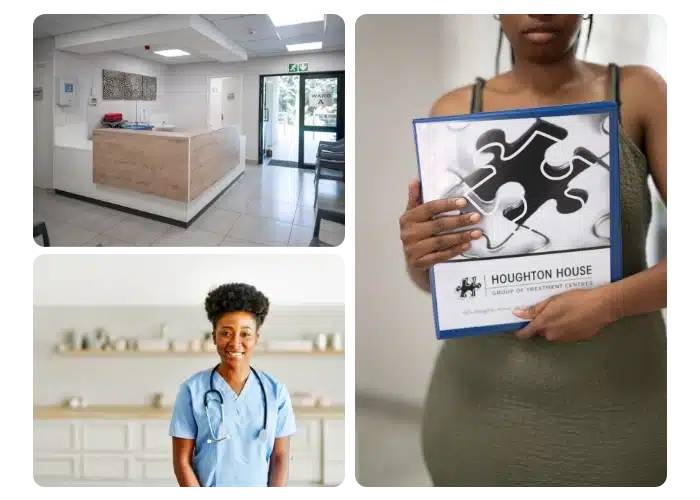
Keeping you safe and comfortable throughout detox
Taking the first step towards recovery — stopping alcohol or drug use — can be extremely dangerous if done without medical oversight. Since withdrawal symptoms can be severe and potentially life-threatening, detox needs to be done in a safe and supportive environment under medical supervision.
Our specialised medical detox unit in Randburg, Johannesburg, offers personalised detox treatment in a supportive clinical setting. No matter how complex or severe your addiction, our team will help you get to the other side of withdrawal. With our skilled, caring staff monitoring your progress and managing your withdrawal symptoms, our world-class medical detox programme provides the medical and emotional support to start your journey to recovery.
Round-the-clock admissions
Start detoxing from alcohol or drugs at any time of the day or night with our 24/7 detox admissions.
Run by addiction detox experts
Detox in one of the very few rehab facilities that’s also a fully licensed private psychiatric hospital with medical staff.
Daily visits from medical doctors
Get daily visits from our staff doctors who check in to monitor your progress and update your personalised detox plan as needed.
Full-time nursing supervision
Rest assured, our specialised nursing staff is on hand around the clock to keep you safe and comfortable during the detox process.
The detox process
When you enter our inpatient treatment programme, you’ll spend the first three days in our medical detox unit.
Here’s how the detox process works:
1. In-depth intake assessment
At intake, our medical team will assess your physical, psychological, and psychiatric condition. They’ll take a detailed history, ask you about co-existing conditions, and create your personalised detox plan.
2. Active withdrawal management
Our clinical team will administer select medications to help ease the discomfort of drug or alcohol withdrawal symptoms that occur during detox. This is known as medication-assisted treatment (MAT).
3. Stabilization and compassionate care
We’ll continue to monitor and manage your withdrawal symptoms using appropriate medications while managing your fluid and electrolyte balance for optimal recovery throughout the detoxification process.
4. Round-the-clock care
Our detox unit in Johannesburg operates 24 hours a day, with daily doctor visits and round-the-clock nursing care. The staff keeps an eye on you day and night, treating any additional symptoms or discomfort you may experience.
Our advanced medical detox protocol
Your personalised detox plan may include various medications to keep you safe, reduce cravings, and ease symptoms. We tailor the medication protocol to each patient’s needs.
Depending on the type and duration of substance abuse, common detox symptoms include:
- Body aches or muscle cramps
- Hot and cold flushes
- Nervousness and anxiety
- Excessive sweating
- Diarrhoea
- Confusion or disorientation
- Hallucinations
- Headaches
- Insomnia
- Irritability or anger
- Nausea and vomiting
- Stomach cramps
- Mood swings
- Trouble concentrating
What happens after medically supervised detox?
Detox clears substances from your body, but physical stabilisation is only part of addiction recovery. Once detox is complete, you move directly into Houghton House’s daily inpatient rehabilitation programme, where treatment addresses the psychological, emotional, and relational work that supports long-term sobriety.
The programme combines group therapy, individual counselling, DBT, CBT, educational lectures, biokinetics, and 12-step work. By the time you complete treatment, you’ll have developed the tools, insight, and support network to manage your sobriety in the world outside.
FAQs
Most patients enter the detox program upon admission. If you’ve come directly from another private psychiatric facility and have no substances in your body, you won’t need medical detox, and you’ll enter the daily inpatient programme right away.
Not everyone requires detox, but it is clinically indicated for substances where withdrawal carries physical risk, including alcohol, benzodiazepines, opioids, and mandrax. The admissions team will assess whether detox is needed as part of the intake process.
Note: Do not try to detox without medical supervision, as this can be very dangerous.
Medical detoxification is the supervised process of managing withdrawal symptoms as drugs or alcohol leave the body. It’s crucial because it ensures safety and comfort during the potentially dangerous withdrawal phase, especially for substances like alcohol, opioids, and benzodiazepines.
Home detox is strongly discouraged for safety reasons, especially for substances like alcohol and benzodiazepines. Withdrawal can be dangerous and potentially fatal without clinical supervision. Houghton House provides a safe, medically supervised detox environment for drug and alcohol withdrawal.
Yes, Houghton House tailors the detox process to each individual’s needs. They consider factors such as the type of substance used, duration of addiction, and any co-occurring mental health issues to create a personalized detoxification and treatment plan.
Medical detox has four stages: an in-depth assessment of your physical and psychiatric condition, symptom management using tailored medication protocols, stabilisation through monitoring and fluid balance, and round-the-clock nursing care throughout. Most patients complete detox within three days before transitioning into the full inpatient rehabilitation programme.
Medical detox is particularly important for alcohol, benzodiazepines (such as Xanax and Ativan), opioids, mandrax, and certain sleeping medications, where stopping abruptly without clinical supervision can cause dangerous or life-threatening withdrawal. Cannabis and cocaine typically do not require medical detox in the same way, though withdrawal symptoms can still be significant.
The duration of medical detox varies by substance and severity of the dependence — how much, how frequently, and how long the patient has been using it. You won’t know exactly how long a detox is needed until the doctor has consulted with the patient. In South Africa, medical aids typically cover 3 days of hospital-based detox.
No, detox is always part of the full inpatient programme at Houghton House.
The first 24 to 72 hours of detoxing are typically the most physically demanding. Withdrawal symptoms vary depending on the substance, your history of use, and your overall health, but most patients experience some combination of sleep disruption, nausea, sweating, anxiety, and muscle aches. Our nursing team monitors you throughout, adjusting your medication protocol as your symptoms change.
After the acute phase, symptoms begin to ease. Sleep and appetite return, concentration improves, and you can start engaging with the clinical team on the next stage of your treatment.
Medication-assisted treatment uses clinically prescribed medications to manage withdrawal symptoms and reduce the risk of complications. The specific protocol depends on the substances involved, how long you’ve been using, and your overall health. Our medical team adjusts your medication throughout the detox process, monitoring your response and modifying the protocol as needed.
MAT addresses the acute physical phase of withdrawal. It doesn’t replace rehabilitation — it makes the transition into the full treatment programme safer and more manageable.
At Houghton House, the dedicated medical detox phase typically lasts three days. During this time, our clinical team monitors you around the clock, managing withdrawal symptoms and adjusting your medication protocol as your condition changes.
Alcohol withdrawal carries a higher risk of serious complications than most other substances. In severe cases, it can cause seizures or delirium tremens (DTs), both of which require immediate medical intervention. Once the acute detox phase is complete, you transition directly into the inpatient rehabilitation programme, where nursing staff and doctors remain on-site throughout your stay.
Read more about alcohol detox and the withdrawal timeline here.
Detox and rehabilitation are two distinct stages of addiction treatment. Detox addresses physical dependency, clearing the substance from your body and managing withdrawal under medical supervision. Rehabilitation begins once detox is complete. Where detox focuses on the body, rehab addresses the psychological, emotional, and behavioural dimensions of addiction: the patterns that drove substance use, the coping skills that sustain recovery, and the relationships that need repairing.
At Houghton House, both stages form part of a single, continuous treatment stay. Once you’re physically stable, you move directly into the daily .
Proud member of
the National Hospital
Network