
Alcohol abuse and alcohol use disorder (AUD) in South Africa

Alcohol abuse is one of the most common and least recognised health concerns in South Africa, affecting people across all backgrounds, income levels, and age groups. For many people, the line between social drinking and dependence shifts gradually, and by the time the problem becomes visible, it has often been present for years.
Alcohol use disorder (AUD) is the clinical term for alcohol addiction. It is a recognised medical condition that changes how the brain processes reward, stress, and self-regulation. Treatment works, and full recovery is possible with the right combination of medical care and psychological support.
What is alcohol abuse?
Alcohol abuse refers to patterns of drinking that cause harm or place a person at risk of harm. This can include drinking more than intended, binge drinking, drinking in unsafe situations, or continuing to drink despite negative consequences at work, school, or home.
A person does not need to be physically dependent on alcohol for their drinking to be considered alcohol abuse. Even without addiction, repeated episodes of heavy drinking or using alcohol to cope with stress can have serious effects on health and well-being.
What is alcohol use disorder?
Alcohol use disorder (AUD) is the clinical term for alcohol addiction. AUD is a recognised medical condition characterised by impaired control over drinking, cravings, physical dependence, and continued use despite harmful consequences.
Over time, repeated alcohol use alters the brain’s reward and stress systems. This can lead to alcohol tolerance, which means more alcohol is needed to achieve the same effect. Withdrawal symptoms may also occur when the affected person stops drinking or reduces their alcohol intake.
With appropriate treatment, most people with AUD can achieve and maintain recovery.
Long-term effects of alcohol abuse
Prolonged or heavy alcohol use can affect nearly every system in the body. Long-term risks include:
- Liver disease, such as fatty liver, hepatitis, and cirrhosis
- Increased risk of heart disease, stroke, and high blood pressure
- Higher risk of certain cancers
- Weakened immune system
- Cognitive problems and memory impairment
- Depression, anxiety, and other mental health conditions
- Strained relationships, family conflict, and social isolation
- Financial, legal, or occupational difficulties
Getting help earlier in the course of alcohol dependence reduces the severity of physical damage and the complexity of treatment.
Alcohol abuse in South Africa
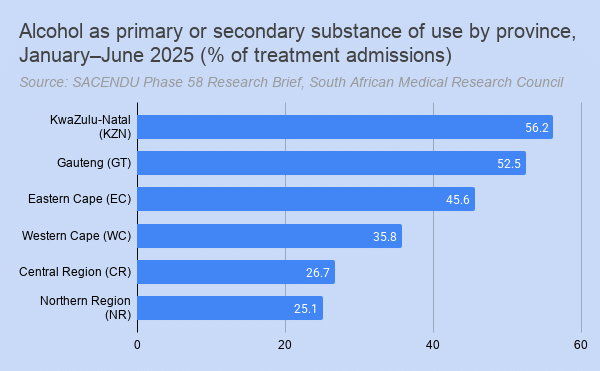
Alcohol is the most widely treated primary substance of use in South Africa, accounting for more treatment admissions than any other drug across most provinces. The picture varies significantly by region, reflecting differences in local alcohol patterns and the presence of other substances competing for treatment capacity.
Treatment admissions data from SACENDU — the South African Community Epidemiology Network on Drug Use, a project by the South African Medical Research Council (SAMRC) — provide the clearest national picture of who is seeking help for alcohol abuse in South Africa.
The most recent data comes from the following two publications:
- SACENDU Phase 58 Research Brief (January to June 2025, published May 2026)
- SACENDU Annual Report Vol 26 (January to December 2024, published March 2026)
Note: SACENDU captures treatment demand rather than population prevalence. Alcohol-related harm is likely considerably more widespread than treatment figures suggest, partly because the social normalisation of drinking means many people do not seek help until dependence is severe.
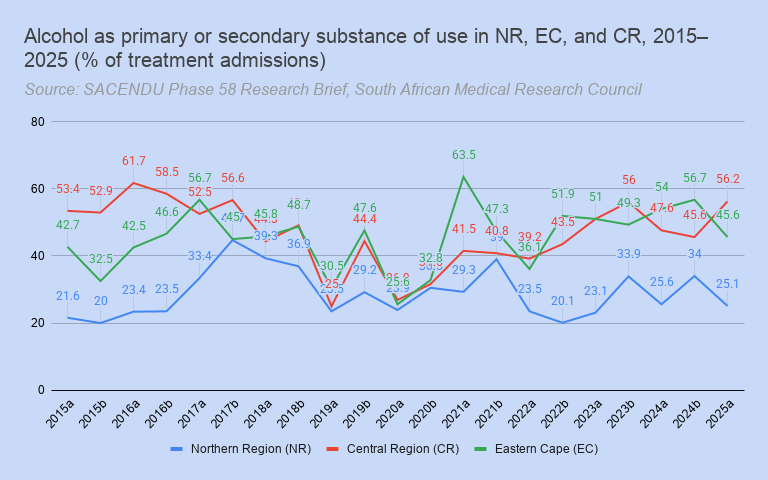
In the first half of 2025, alcohol accounted for 56.2% of treatment admissions in the Central Region (Free State, North West, and Northern Cape) and 52.5% in KwaZulu-Natal, according to the latest SACENDU research brief. In contrast, Gauteng recorded 26.7% and the Northern Region 25.1%.
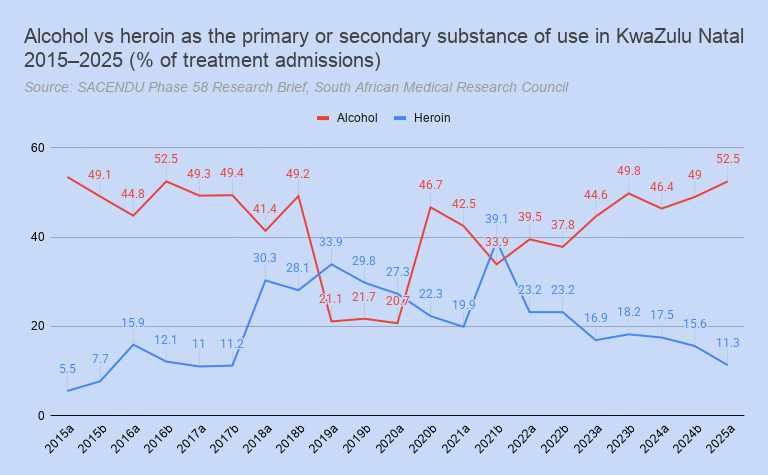
KwaZulu-Natal illustrates how dramatically alcohol’s treatment share can shift when another substance surges. Alcohol ran at around 50% of treatment admissions in the province through 2018, before crashing to 21.1% in the first half of 2019 as heroin surged to 33.9% in the same period. The two substances tracked each other almost perfectly in inverse — as heroin rose, alcohol fell, and as heroin has since declined to 11.3% in 2025, alcohol has recovered to 52.5%.
In Gauteng, the story is one of gradual displacement rather than sudden shift. Alcohol’s share fell from 27.3% in the first half of 2015 to a low of 11.9% in the second half of 2020 as methamphetamine treatment demand grew steadily. Rates have since recovered to 26.7% in the first half of 2025, roughly back to where they stood a decade ago.
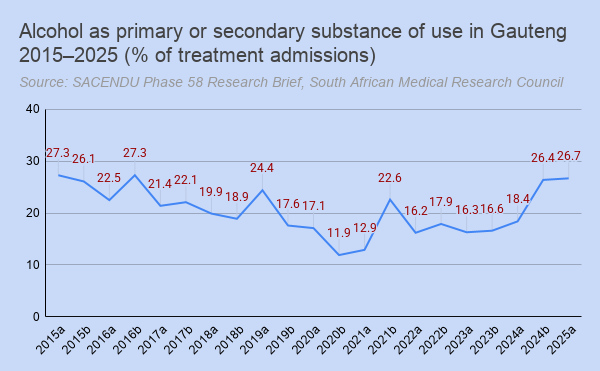
The sharpest single drop in Gauteng coincided with the COVID-19 pandemic. Alcohol’s share fell from 17.6% in the second half of 2019 to 11.9% in the second half of 2020, while meth admissions surged in the same period.
Across most provinces, alcohol admissions fell disproportionately during the 2020 lockdown periods — likely because SA’s alcohol sale bans reduced acute presentations and voluntary admissions for alcohol dependence, while having no equivalent effect on illicit substances. As restrictions were lifted, alcohol treatment demand recovered.
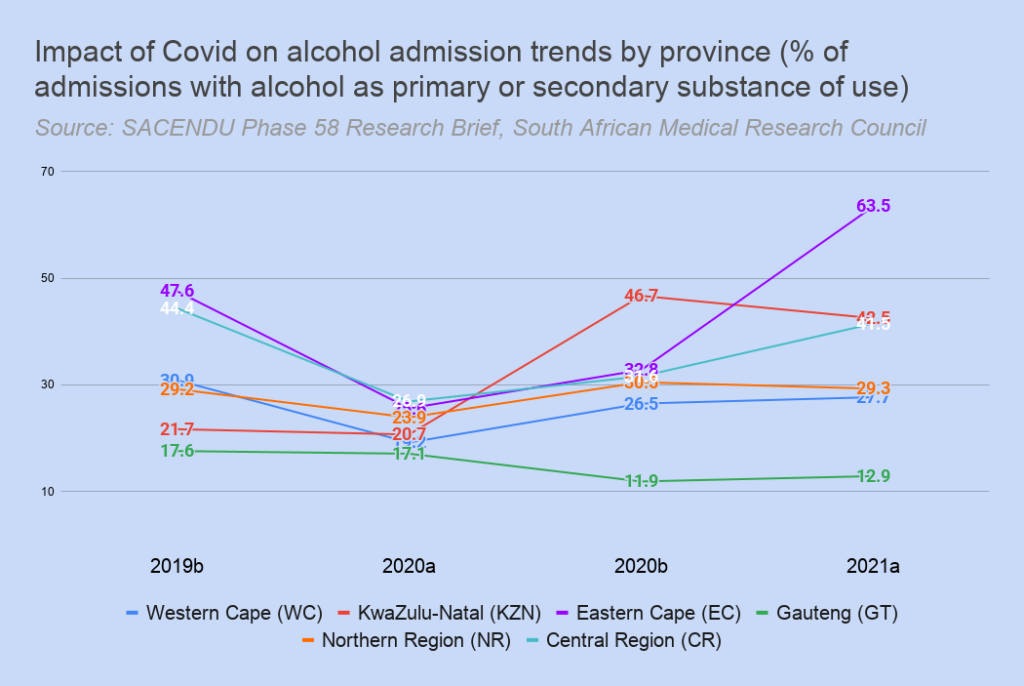
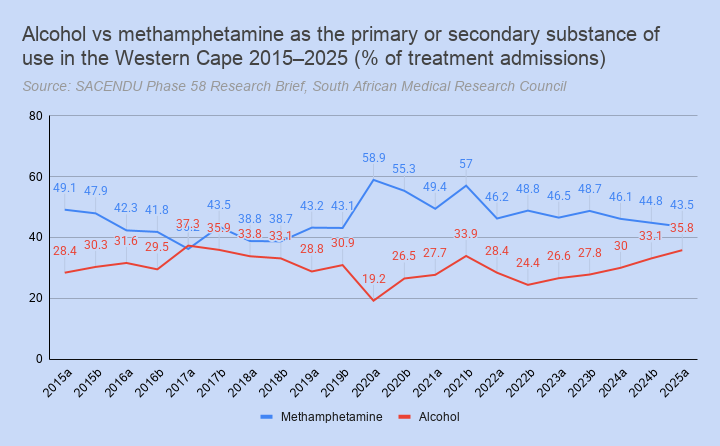
The Western Cape follows a different pattern to both KZN and Gauteng. Methamphetamine has dominated treatment admissions there for over two decades, leaving alcohol consistently lower — at 35.8% in 2025, recovering from a low of 19.2% in early 2020 when both the lockdown and peak meth demand coincided.
The Eastern Cape and Central Region, where alcohol has remained high throughout, sit closer to 45–56%, while the Northern Region tends to range from 20–40%.
Recognising alcohol addiction and getting help
For many people, the progression from heavy drinking to alcohol dependence is gradual. There is rarely a single moment at which drinking becomes a problem. What changes is the degree to which alcohol organises daily life: what time drinking starts, what is cancelled to make it possible, and what happens in its absence.
Signs of alcohol addiction
Some common signs that drinking has become a problem include:
- Difficulty limiting or controlling your alcohol use
- Drinking alone or in secret
- Significant mood swings
- Feeling irritable or anxious when unable to drink
- Needing more alcohol to feel the same effect
- Continued drinking despite harm to health, work, or relationships
- Hiding bottles or lying about alcohol use
- Missing responsibilities due to drinking or hangovers
- Repeated attempts to stop drinking without success
If several of these signs apply, speaking to a doctor or an addiction specialist is a practical next step. Our alcoholism questionnaire can also help clarify whether drinking has crossed into dependence.
If you think this describes someone you care about, we can help you plan an intervention for your loved one.
The dangers of quitting alcohol “cold turkey”
For some people, stopping alcohol suddenly can be dangerous. Severe withdrawal can include seizures, heart rhythm disturbances, or a condition known as delirium tremens, which can be life-threatening without medical care.
People who have been drinking heavily for a long time, or who have had withdrawal symptoms before, are especially at risk. For these individuals, detoxing from alcohol without medical supervision can be unsafe.
Anyone who has been drinking heavily for an extended period should seek medical advice before attempting to stop.
Alcohol withdrawal symptoms
Alcohol withdrawal symptoms can range from mild to severe and may include:
- Anxiety
- Restlessness
- Sweating
- Tremors (shaking)
- Headaches
- Nausea
- Vomiting
- Sleep disturbances (insomnia)
- Increased heart rate
- Increased blood pressure
- Seizures
- Confusion
- Hallucinations
Symptoms usually begin within hours of the last drink and often peak within the first three days.
How to safely stop drinking alcohol
The safest way to stop drinking is to seek a professional assessment. Many people benefit from medically supervised detox, where healthcare providers monitor withdrawal symptoms and ensure stability.
Others may begin with outpatient support, therapy, or community resources.
A personalised treatment plan tailored to each person’s needs helps manage withdrawal risks and supports long-term sobriety. Treatment plans typically combine medication, counselling, group therapy, and ongoing recovery support.
Rehab for alcohol abuse
Alcohol rehab addresses both the physical and psychological dimensions of dependence. At Houghton House, treatment is built around each person’s level of dependence, health history, and any co-occurring conditions. The goal is not only to stop drinking safely but to understand and address what has sustained the pattern of use.
Programmes vary in intensity and setting. Some people require medical detox and inpatient care, while others benefit from outpatient treatment or ongoing support services. The most effective approach is one that matches the individual’s needs, level of dependence, and overall health.
Alcohol detox
Detox is often the first step in treatment. Medical detox focuses on helping the body stabilise as alcohol leaves the system. Medical professionals monitor withdrawal symptoms and manage complications to ensure safety and comfort. For a detailed overview of what to expect, read our guide to alcohol detox and withdrawal.
Medication-assisted treatment for alcohol addiction
Certain medications can help reduce cravings, prevent relapse, or support long-term abstinence. These may include naltrexone, acamprosate, or disulfiram. Medication is most effective when combined with counselling and structured support.
Inpatient alcohol rehab
Inpatient rehab provides a residential setting with round-the-clock support. Programmes typically include individual therapy, group therapy, relapse prevention, and psychoeducation. This level of care is ideal for people who need a structured environment away from triggers.
Psychiatric care and dual diagnosis treatment
Many people with AUD also experience depression, anxiety, trauma, or other mental health conditions. Treating both conditions at the same time leads to better outcomes. Dual diagnosis care integrates psychiatric support into the addiction treatment process.
Read more about dual diagnosis treatment and how co-occurring conditions are managed at Houghton House.
Outpatient treatment for alcohol abuse
Outpatient rehab programmes allow individuals to receive treatment while continuing with work or family responsibilities. This option is best suited to those with stable support systems and lower medical risk.
Sober living facilities (AKA halfway houses)
After completing primary treatment, sober living environments provide structured, alcohol-free accommodation following treatment. Halfway houses offer accountability, peer support, and a gradual transition back into daily life while maintaining recovery.
Support groups: Alcoholics Anonymous and 12-step programmes
Peer-based support groups like Alcoholics Anonymous (AA) provide individuals in recovery with ongoing encouragement and connection with other people in recovery. AA meetings focus on shared experiences, accountability, and ongoing personal growth. Many people find AA helpful as a resource for long-term sobriety.
Medical aid cover for alcohol treatment
Alcohol use disorder is a Prescribed Minimum Benefit (PMB) in South Africa. This means all registered medical aids are legally required to cover addiction treatment for alcohol dependence. Because Houghton House holds dual licensing as a rehabilitation facility and a registered psychiatric hospital, patients can additionally claim for psychiatric services where co-occurring conditions qualify under psychiatric PMBs.
To confirm what your scheme covers, contact our admissions team or visit our medical aid cover page for information on specific schemes including Discovery, Bonitas, GEMS, and others.
You can also read more about how medical aid covers addiction treatment.
Frequently asked questions
Do rehabs differentiate between alcoholism and drug addiction?
Many treatment centres use similar therapeutic approaches for alcohol and drug addiction, but they tailor care based on the substance involved, the severity of dependence, and any underlying mental health conditions. Medical detox for alcohol is often distinct due to withdrawal risks.
What are the 12 Steps of AA?
The twelve steps provide a structured framework for recovery that includes acknowledging the problem, seeking support, taking responsibility for past actions, and maintaining ongoing personal growth and accountability. AA meetings guide members through this process at their own pace.
Where can I attend AA meetings?
AA meetings are available across South Africa, both in person and online. Local AA websites and helplines provide current meeting listings and schedules.
What to expect from AA meetings?
AA meetings are confidential and non-judgmental. Participants may share their experiences or simply listen. There is no obligation to speak, and meetings are free to attend.
Read the inspiring success stories of other people in recovery who found healing at Houghton House.
